
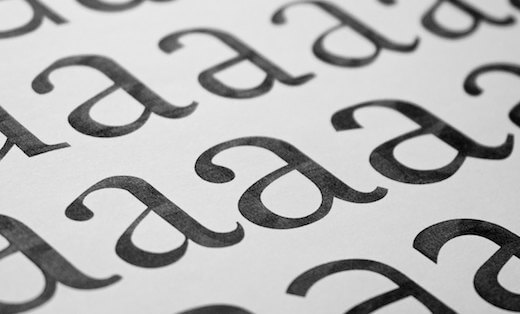
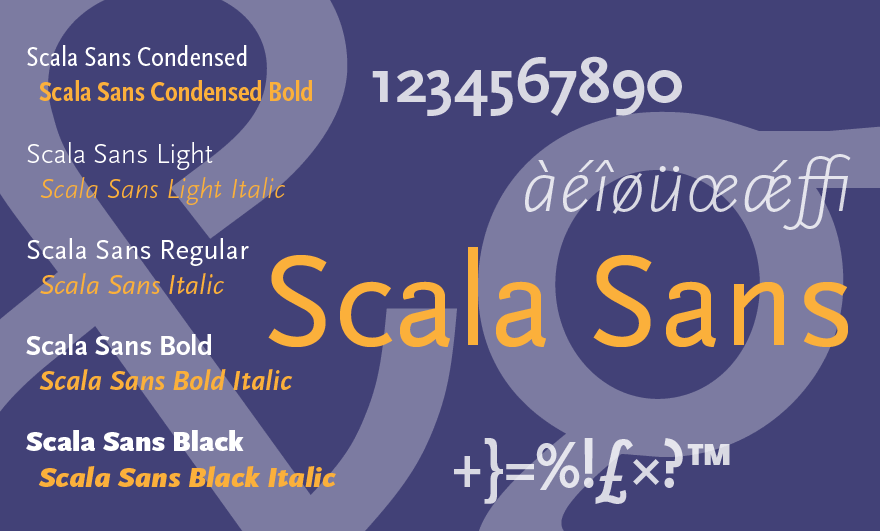
Typefaces are miniature (and sometimes, not so miniature! The largest typefaces can have upwards of 60,000 characters) works of art, which can take a specialist type-designer years to complete. Each will have at least one font (or style), but they can have dozens: roman and italic, in a dizzying range of weights from extra-light to ultra-bold.
Fonts are made up of hundreds of characters. Each one is individually drawn, then carefully spaced, so they work well together in pretty much any combination. Even basic fonts have uppercase, lowercase, numbers, and punctuation. Many are far more extensive.
It’s a significant amount of work for the designer, and they deserve to be paid for it.
Licensing, not buying
We often talk about ‘buying’ typefaces or fonts, but this is misleading. In reality, we are licensing it to use in predefined ways, rather than buying it outright. The typeface itself always remains the property of the designer and is protected by copyright.
Typeface licences are also called End-User Licence Agreements or EULAs. They are by no means standard, although they do share some common themes. Because they vary so much, it’s important to read the terms before you buy. If you are in any doubt, contact the foundry for clarification.
Here are a few aspects of licensing that you’ll need to consider:
Planned usage
When you licence a typeface you are asked how you plan to use it. The range of available options might include desktop, web font, digital ads, app, ePub, or server. ‘Desktop’ has a one-off fee, but others are subject to specific quotas. For example, ‘web font’ might have a limit on the number of page-views using the typeface before it expires.
Some licences specifically exclude using a typeface for wordmarks or logotypes. Your designer should be alert to this issue, but it’s worth checking before you commit to a logotype which could cause problems in the future.
Who will the licensee be?
Some foundries permit you to assign the licence to any named individual, while others only allow the licensee to be the buyer. In this case, you may find you need to ask third parties to purchase licences themselves.
If you are buying for a business, consider making the company the licensee, rather than an individual. Doing this will keep the licence in the company, even if the individual leaves. It will also fit better with multi-seat licences, where one licence covers more than one computer, as these are usually only valid on computers belonging to the licensee.
How many licences do you need?
Everyone who uses the typeface needs to be covered by a valid licence.
It’s a good idea to think about how many people might need to use the typeface in five years as multi-seat licences can offer better value for money. Again, bear in mind that this sort of licence is usually limited to use on multiple computers belonging to one licensee.
External suppliers, such as designers, will also need a licence so they can produce work for you. Since your computers are almost certainly owned by different people, they cannot use a ‘seat’ of your multi-seat licence. Designers often pass on the associated costs of buying licences to clients. In this situation, the designer remains the licensee, so they will be able to use the typeface in future projects.
A licence will occasionally permit you to share a typeface with external designers for the express purpose of completing work for you. This can save money and is helpful, but it is quite rare, so always check your licence agreement first!
If you do share a typeface with someone then you must make clear what they can and can't do with it. Remember, as the licensee the typeface is your responsibility.
Alternative solutions
If you are cost-sensitive, or the whole thing feels overwhelming, then there are freely-available alternatives – Google Fonts, for example.
The ‘system fonts’ that come preloaded on your computer are fine to use, too. However, these are very standard, and standing out from the competition is going to be hard if your materials look identical to theirs!
Your designer should be able to help you navigate typeface licences so you stay the right side of the law, and your business remains distinctive!
Related posts
 Recent posts
- Accessible PDF heading structure and the problem of phantom headings
- Accessible colour contrast for text
- How we can work together on accessible PDFs
- Acronyms & initialisms
- The best fonts for accessibility
Featured posts
Briefing a designer
Eight reasons to use freelance creatives
Putting a freelance designer at the heart of your project

Hello! I’m Sarah, an independent typographic designer.
I’ve been sharing my knowledge about design, typography, marketing, branding and printing since 2014. I hope you enjoy reading my blog.

Sarah Cowan